Email Marketing for Small Business: How to Create a Newsletter that Converts in 2026
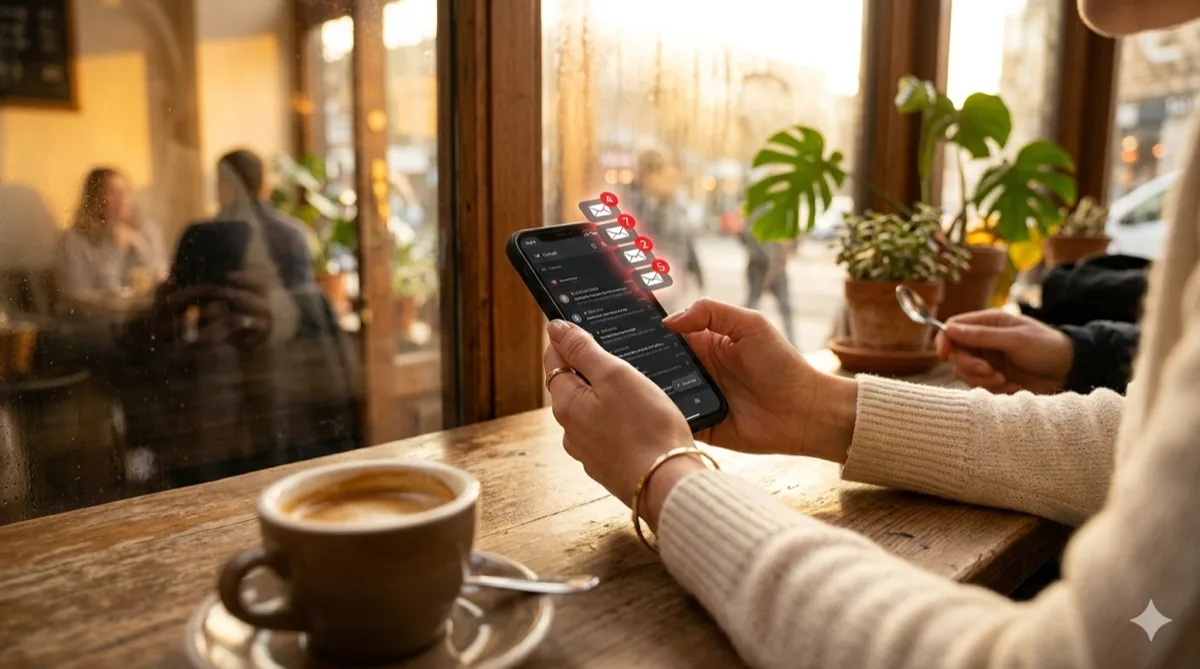
Every euro invested in email marketing generates an average return of 36 euros. This is not hyperbole — it is the certified figure from the Data & Marketing Association, confirmed by every industry study of the past decade. Not social media (average ROI of 2.80 euros), not paid advertising on Google (average ROI of 8 euros), not content marketing as a whole. Email marketing, in 2026, remains the channel with the highest return on investment of all — and the majority of small businesses completely ignore it.
If you run a small or medium-sized business and you don't yet have a newsletter, or you have one but it's not delivering results, this guide is for you. We explain how to create a newsletter from scratch, how to build a mailing list without buying contacts, which platform to choose, how to write emails that actually get read, and how to set up automations that work on your behalf — all in compliance with GDPR. With concrete data, prices updated to 2026, and practical advice you can apply starting tomorrow. Email marketing is the fifth pillar of a complete digital marketing strategy for SMEs, and it's often the one that transforms visitors into paying customers.
Email marketing in 2026: why it has the highest ROI of all
What makes email marketing so effective in 2026, in a world dominated by social media and artificial intelligence? The numbers speak clearly. In Italy there are 38.6 million active email users, and 99% of internet users check their inbox at least once a day. 73% of Italian consumers prefer to receive commercial communications via email rather than through any other channel.
Here are the key data points:
- Average ROI: 36:1 — for every euro invested, 36 come back (source: DMA/Litmus 2025)
- Average open rate in Italy: 33.4% — much higher than the global average (21.5%), thanks to a less saturated market
- Average click rate: 3.1% — meaning that out of 1,000 subscribers, approximately 31 click through and visit your site with every send
- Conversion rate: 6.05% — nearly 6 times higher than social media (1.12%)
- 60% of consumers have made a purchase directly after receiving a promotional email
But the real advantage is not in the aggregate numbers — it is in the model itself. Unlike social media, where the algorithm decides who sees your content (on Facebook, organic reach has dropped to 2.6% in 2026), with email marketing you own the list. No algorithm, no sudden drops in visibility. When you send an email, it arrives in the recipient's inbox. Social media are "rented" channels — your mailing list is a proprietary asset, the database of your customers that no one can take from you.
Finally, email marketing integrates perfectly with every other channel. Do you have an e-commerce store? Abandoned cart emails recover an average of 7.4% of lost sales. Do you have a physical shop? A weekly newsletter drives customers to your store with dedicated offers. Do you have a website? Sign-up forms turn anonymous visitors into workable contacts. Email marketing does not replace other channels — it amplifies all of them.
How to build a mailing list from scratch (without buying lists)
The temptation is strong: for 200-500 euros someone sells you 50,000 "targeted" email addresses. In reality, it is the fastest way to burn money and risk GDPR fines of up to 20 million euros or 4% of annual turnover. Purchased lists have open rates below 2%, bounce rates above 15-20% that get your domain blacklisted, and violate GDPR because you lack explicit consent. The Italian Data Protection Authority has already fined SMEs for this.
The good news? Building a mailing list from scratch is simpler than you think. Here are the strategies that work in 2026.
Lead magnets: offer something valuable in exchange for the email
A lead magnet is a free piece of content or offer you provide in exchange for an email address. Nobody gives you their email "just because" — you need to give them a concrete reason. Here are lead magnets that work, with real conversion rates:
- Welcome discount (10-15%): conversion rate 5-8%. Perfect for e-commerce and retail. "Subscribe and get 10% off your first order."
- Free PDF guide: conversion rate 3-6%. Ideal for professional services. An accountant could offer "2026 Tax Deduction Guide for SMEs", a restaurant "10 Recipes from Our Chefs".
- Checklist or template: conversion rate 4-7%. A marketing agency could offer "Checklist for Launching Your E-commerce", a labour consultant "Template for Calculating Employee Costs".
- Webinar or exclusive video: conversion rate 2-5%. Perfect for consultants and trainers.
- Early access to offers: conversion rate 3-5%. "Subscribe to our newsletter and discover our deals 24 hours before everyone else."
Sign-up forms on your website
Your website is the primary collection point for your mailing list. A simple "Subscribe to our newsletter" in the footer has a conversion rate of just 0.3%. To build your mailing list effectively, you need strategic forms with clear value propositions:
- Timed pop-up (after 30-60 seconds): conversion rate 3-5% — annoying? Perhaps. Effective? Enormously. A well-designed pop-up with a clear lead magnet generates more sign-ups than any other tactic.
- Sticky bar at the top: conversion rate 1-2% — less invasive than a pop-up, always visible during navigation.
- Within blog content: conversion rate 2-4% — insert a form in the middle of a relevant article, when the reader is already engaged.
- Exit intent pop-up (when the user is about to leave): conversion rate 2-4% — the last opportunity to convert a visitor who was about to leave.
- Dedicated page (landing page): conversion rate 5-15% — a page created specifically for email collection, linked from your social and ad campaigns.
If your website does not yet have optimised sign-up forms, it is a missed opportunity every single day. A professional web development service can integrate email collection forms seamlessly, consistent with your site design and fully GDPR-compliant.
Offline collection: your physical shop as a source of contacts
If you have a physical location, you can collect emails from people already customers. A tablet at the checkout, a QR code on the counter, a card in the packaging — all simple and effective methods. A shop with 50 customers per day can collect 15-20 emails per week with a simple "Leave your email to receive exclusive offers and 10% off your next purchase".
Social media as a bridge to your mailing list
Use your social profiles to promote the lead magnet: an Instagram Story with a link to the landing page, a Facebook post with the sign-up form, a bio with a direct link. The key concept: use social media to bring people onto your email list, because on the list you own them, on social media you do not.
Realistic goal for an SME starting from zero: 100-300 subscribers in the first 3 months, 500-1,000 within the first year. A list of 500 qualified subscribers is worth far more than a purchased list of 10,000 contacts.
Which platform to choose (free vs professional)
To create a newsletter and manage your mailing list, you need an email marketing platform. In 2026 there are dozens of options. The right choice depends on the size of your list, the level of automation you want, and your budget.
Free platforms: start without risk
Most email marketing platforms offer a free plan, ideal for SMEs just getting started. Free plans typically include:
- Up to 500-1,000 subscribers
- 1,000-10,000 emails per month
- Drag-and-drop editor for creating graphic newsletters
- Pre-designed templates
- Basic statistics (opens, clicks, unsubscribes)
- Sign-up forms to integrate into your site
The limitations: the platform's logo on your emails, limited automations, basic segmentation. For an SME with fewer than 500 contacts sending 2-4 emails per month, the free plan is more than sufficient to get started.
Paid plans: when you need them
When your list exceeds 500-1,000 subscribers or you need advanced automations, you will need to upgrade to a paid plan. Here are the average costs in 2026:
- 1,000-2,500 subscribers: 15-35 euros/month
- 2,500-5,000 subscribers: 30-60 euros/month
- 5,000-10,000 subscribers: 50-100 euros/month
- 10,000-25,000 subscribers: 100-200 euros/month
Paid plans unlock the features that make the real difference: email automations (automatic sequences based on user behaviour), advanced segmentation (sending different emails to different groups of subscribers), A/B testing (testing two versions of the subject line to see which performs better), removal of the platform's logo, premium templates, and dedicated support.
How to choose the right platform
There is no single "best" platform. Here are the criteria that truly matter for an SME:
- Ease of use: if you are not technically inclined, the editor must be intuitive and drag-and-drop. All major platforms now offer this, but the experience varies considerably.
- Deliverability: the percentage of emails that actually reach the inbox (not spam). The most established platforms have deliverability rates above 95%.
- Automations: if you want to implement welcome sequences, abandoned cart emails, or behaviour-based campaigns, verify that the platform supports them at the plan you can afford.
- Integrations: the platform must integrate with your website, your e-commerce store (if you have one), and your CRM. Check available integrations before choosing.
- GDPR compliance: choose platforms that natively include double opt-in, consent management, and automatic unsubscribe functionality.
- Support in your language: having documentation and support available in your language can make a significant difference for day-to-day management.
Our advice: start with the free plan of an established platform, validate your strategy, and upgrade to a paid plan only when list growth makes it necessary.
How to write a newsletter that actually gets read (structure and copywriting)
You have the list, you have the platform. Now comes the most important part: how to write a newsletter that people open and click. The average email inbox in 2026 receives 47 emails per day. Your newsletter competes with everything else for a few seconds of attention.
The subject line: the 5 most important words in your email marketing
47% of users decide whether to open an email based solely on the subject line: nearly half of your newsletter's success depends on a single line of 40-60 characters. Here are the rules that work:
- Ideal length: 35-50 characters (6-10 words). Beyond 60 characters it gets truncated on mobile — and 68% of emails are read on smartphones.
- Personalisation: subject lines with the recipient's name have an open rate 22% higher. "Marco, here are this week's deals" beats "This week's deals" every time.
- Numbers and specifics: "5 tips to cut your heating bill" works better than "Tips to save money".
- Urgency (used sparingly): "Today only: 30% off everything" works — but if every email is "urgent", none of them truly are.
- Curiosity: "We changed everything (and the results surprised us)" stimulates opens. But don't lie — the content must deliver on the subject line's promise.
Formulas that work for small businesses:
- "[Number] [benefit] for [target]" — "5 ways to reduce your shop's energy costs"
- "How to [desired result] without [obstacle]" — "How to increase sales without hiring"
- "[Name], [question]" — "Laura, have you seen the April arrivals?"
- "The mistake [percentage] of SMEs make with [topic]" — "The mistake 90% of SMEs make with pricing"
The perfect email structure: Hook + Value + CTA
Every effective email follows the Hook + Value + CTA structure.
Hook (the first 2-3 lines): open with a surprising statistic, a provocative question, a personal story, or a problem the reader immediately recognises. Never open with "In this newsletter we discuss..." — nobody will read it.
Value (the body of the email): give the reader something useful, concrete, and actionable. The golden rule: every email must make the reader think "I'm glad I opened this".
CTA (call to action): a single objective and a clear action. "Discover the offer", "Book your appointment", "Reply to this email". One main CTA — not three different links competing with each other.
Sending frequency: how often to send
There is solid data to base your decision on:
- 1 email per week: the most common frequency and generally the safest. Average unsubscribe rate: 0.1%
- 2 emails per week: works well for e-commerce and businesses with frequent updates. Unsubscribe rate: 0.15%
- 1 email every 2 weeks: acceptable for professional services and B2B. Risk: readers forget about you.
- 1 email per month: too infrequent to maintain the relationship. Open rate is typically lower because the reader doesn't remember subscribing.
The best day and time? Italian data for 2026 indicates that Tuesday and Thursday between 9:00 and 11:00 see the highest open rates for B2B, while for B2C Saturday morning and Sunday evening work surprisingly well. But the best advice is: test with your own audience. Use A/B testing to send the same email at two different times and discover when your subscribers are most responsive.
Email automations: set up once, sell forever
Email automations separate those who "send newsletters" from those who have an automated sales system. An automation is a sequence of emails sent automatically when a user takes a specific action: they subscribe, abandon a cart, or haven't opened emails for a month. You set up the sequence once, and it works forever.
Welcome sequence: the most important one
Welcome emails have an average open rate of 82% — more than double any other type of email. Here is an effective welcome sequence:
- Email 1 (immediate): thank them for subscribing, deliver the promised lead magnet, briefly introduce who you are and what you do. Warm and personal tone.
- Email 2 (day 2): tell your story — why you founded the business, what problems you solve, what makes you different. People buy from people, not from companies.
- Email 3 (day 4): offer pure value — your best advice, your most useful guide, customer FAQs. Demonstrate expertise without selling anything.
- Email 4 (day 7): present your offer with an exclusive incentive for new subscribers. A discount, a free trial, a complimentary initial consultation. This is the email that converts.
A well-constructed welcome sequence can generate 320% more revenue than a single generic welcome email. And once it is set up, it works automatically for every new subscriber, forever.
Abandoned cart: recovering lost sales
If you have an e-commerce store, the abandoned cart automation is money left on the table. On average, 70.2% of shopping carts are abandoned before payment. A sequence of 3 emails can recover 7-15% of them:
- Email 1 (1 hour later): "Did you forget something?" — a simple reminder with an image of the product and a direct link to the cart.
- Email 2 (24 hours later): add social proof — reviews from other customers about the same product, the number of people who have purchased it.
- Email 3 (48-72 hours later): offer a small incentive — free shipping, 5-10% discount, a freebie. This email closes the sale for those who had a price objection.
For an e-commerce store with 100 abandoned carts per month and an average value of 80 euros, recovering 10% means 800 euros in extra sales per month — completely on autopilot.
Other high-impact automations
Beyond the welcome sequence and abandoned cart, here are other automations every SME should consider:
- Birthday email: a personalised discount on the subscriber's birthday has a conversion rate 5 times higher than the average promotional email.
- Re-engagement: a sequence for subscribers who haven't opened your emails for 60-90 days. "We miss you! Here's a special offer for you." It recovers 5-10% of inactive subscribers.
- Post-purchase: say thank you, ask for a review, suggest complementary products. The cost of acquiring a second purchase is 5 times lower than the first.
- Follow-up after a quote: for service businesses, an automatic sequence that follows up after sending a quote with valuable content and social proof can increase the closing rate by 15-25%.
Artificial intelligence is making automations even more sophisticated: in 2026, many platforms offer AI features that optimise sending times for each subscriber, generate alternative subject lines, and suggest segmentations based on behaviour. If you want to explore intelligent automation, also discover the possibilities offered by AI chatbots for customer service.
Segmentation: the secret of emails that convert
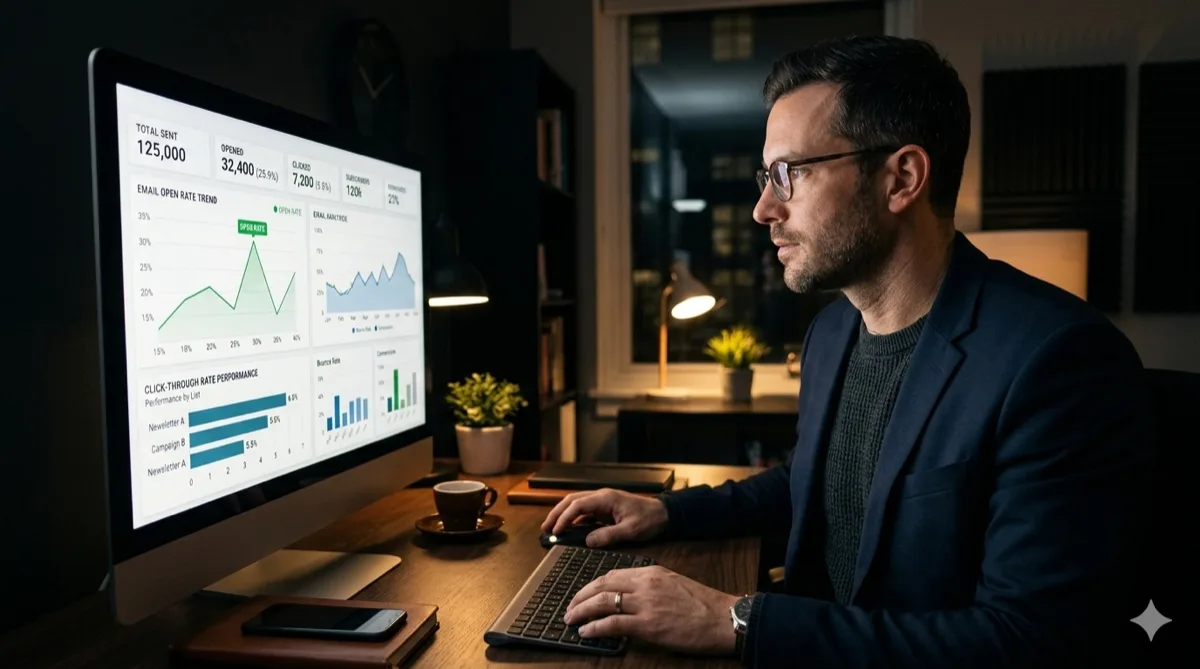
Segmentation — dividing your mailing list into smaller groups based on shared characteristics — is the factor that, more than any other, determines email marketing success. The numbers are unequivocal: segmented campaigns generate an open rate 14.3% higher, a click rate 100.9% higher, and 760% more revenue than generic emails.
How to segment your mailing list
Even with 200-300 contacts, you can create meaningful segments. Here are the most effective criteria for an SME:
- By purchase behaviour: active customers (purchased within the last 90 days), dormant customers (last purchase 90-180 days ago), lost customers (no purchase for more than 180 days). Each group receives different messages: offers for the dormant, news for the active, strong incentives for the lost.
- By interest/product category: if you sell different products or services, segment based on what each subscriber is interested in. A clothing shop can segment by men/women/children, an agency by the type of service requested.
- By engagement level: subscribers who always open your emails, subscribers who open occasionally, inactive subscribers. The most engaged deserve exclusive content and VIP offers.
- By sign-up source: those who subscribed from the website, from the shop, from an event, from social media. The source tells you a lot about the subscriber's intent.
- By geographic location: particularly useful for businesses with multiple locations or localised services. A restaurant with 3 locations can send different offers by area.
- By customer journey stage: lead (never purchased), first purchase, returning customer, VIP customer. Each stage requires a different type of communication.
Segmentation in practice: a concrete example
Imagine you run a sporting goods shop with 800 subscribers. Instead of one weekly email for everyone, you create 3 segments:
- "Runner" segment (280 subscribers): they have purchased running shoes or running apparel. They receive emails about new shoe models, training tips, local running events.
- "Gym" segment (350 subscribers): they have purchased fitness equipment or supplements. They receive emails about fitness news, supplement offers, class schedules.
- "Outdoor" segment (170 subscribers): they have purchased trekking or camping gear. They receive emails about new outdoor collections, recommended trails, seasonal offers.
The result? Instead of an open rate of 33% across the entire list (264 emails opened), with segmentation you reach 42-48% (336-384 emails opened). More opens, more clicks, more sales — with the same number of subscribers and the same writing effort.
How much does email marketing cost for an SME
Let's look at the real costs in 2026 for a small business, divided between in-house and professional management.
In-house management (DIY)
If you manage email marketing internally, the main costs are the platform and your time:
- Email marketing platform: from 0 euros (free plan, up to 500-1,000 subscribers) to 30-100 euros/month for plans with automations and advanced segmentation
- Time invested: approximately 3-5 hours per week for content creation, results analysis, and list management. Calculate the value of your time and you will have the real cost.
- Professional email templates: a one-time investment of 100-300 euros for custom email templates with your company colours and logo. Many platforms offer ready-made free templates.
- Training: an email marketing course for SMEs costs between 100 and 500 euros. An investment that pays for itself within the first month of optimised campaigns.
Estimated total cost for an SME with in-house management: 50-200 euros/month (platform + time + amortised initial costs). It is the most affordable digital marketing channel relative to the return.
Professional management
If you prefer to rely on an agency or a freelance email marketing specialist, here are the average costs in the Italian market in 2026:
- Specialist freelancer: 300-800 euros/month for complete management (strategy, copywriting, sending, analysis) of a weekly newsletter with basic segmentation and 2-3 automations.
- Email marketing agency: 800-2,000 euros/month for a comprehensive package including strategy, content creation, professional design, advanced automations, segmentation, A/B testing, and detailed monthly reports.
- "Setup + training" package: 1,000-3,000 euros one-time to set up the platform, create templates, configure the main automations, and train you to manage everything independently. The ideal solution for those who want to start the system and then run it in-house.
Cost per contact: the metric that matters
To understand whether email marketing is worthwhile, calculate the cost per active contact per month. If you spend 100 euros per month (platform + time) and you have 1,000 subscribers, your cost is 0.10 euros per contact per month. If each email generates an average of 3% clicks and a 6% conversion rate on those clicks, with an average order value of 50 euros, every send to 1,000 subscribers generates approximately 900 euros in sales. The ROI speaks for itself.
Comparison with other channels: a click from a paid Google advertising campaign costs on average 0.50-3 euros. A click from your newsletter costs virtually zero (the platform cost is already covered). This is why email marketing has the highest ROI: the marginal cost of every email sent is practically nil.
GDPR and newsletters: rules to follow to stay compliant
Email marketing in Italy and the EU is regulated by the GDPR (in force since 2018), the Italian Privacy Code (Legislative Decree 196/2003, updated by Legislative Decree 101/2018), and the Guidelines of the Italian Data Protection Authority. Fines can reach up to 20 million euros or 4% of global annual turnover. But complying with GDPR is not complicated if you know what to do.
Explicit and specific consent
You cannot send commercial emails to someone who has not given explicit consent to receive them. This means:
- The sign-up form must have an unchecked checkbox with which the user consents to receiving commercial communications. A pre-ticked checkbox is not valid consent.
- Consent must be specific: if you collect the email to send a quote, you cannot use it for the newsletter without separate consent.
- You must keep proof of consent: date, time, IP address, exact text the user consented to. Professional email marketing platforms record everything automatically.
- Consent for email marketing must be separate from acceptance of terms of service or the privacy policy. You cannot tie newsletter subscription to the acceptance of other conditions.
Double opt-in: the recommended practice
Double opt-in means the user receives a confirmation email with a link to click after subscribing. It is not strictly mandatory in Italy, but it is strongly recommended by the Data Protection Authority. It provides the strongest proof of consent, ensures addresses are real, and improves deliverability. Lists with double opt-in have open rates 20-30% higher.
Privacy notice and data subject rights
Every email collection form must be accompanied by a link to the privacy notice (or include an excerpt) that clearly explains:
- Who collects the data (company name, VAT number, contact details)
- Purpose of processing (sending newsletters, commercial communications, profiling)
- Legal basis for processing (consent of the data subject, per Art. 6.1.a GDPR)
- Data retention period (how long you keep the data)
- Rights of the data subject: access, rectification, erasure, portability, objection to processing
- Any data transfers outside the EU (if the email marketing platform has servers outside the EU)
Mandatory unsubscribe link
Every commercial email must contain a clear and functional unsubscribe link. The user must be able to unsubscribe with a single click, without logging in or filling out forms. Since 2024, Google and Yahoo also require the List-Unsubscribe header for bulk senders — professional email marketing platforms handle this automatically.
What NOT to do: common GDPR mistakes in SMEs
- Do not add customers to the newsletter without consent. The fact that someone is your customer does not automatically authorise you to send them promotional emails. You can send communications related to the purchased service (legitimate interest), but for a commercial newsletter you need separate consent.
- Do not use business cards collected at trade fairs to add people to the mailing list without consent. The exchange of a business card is not consent to data processing for email marketing.
- Do not make unsubscribing impossible. If a user asks to be removed and you continue to send emails, you risk a complaint to the Data Protection Authority.
- Do not send emails to purchased lists. It bears repeating: it is illegal, ineffective, and dangerous for your domain's reputation.
In summary: complying with GDPR is not an obstacle — it is a competitive advantage. A list built with the explicit consent of subscribers is a quality list, with people genuinely interested in what you offer. And this translates into much higher open rates, clicks, and conversions.
Your next step: from reader to email marketing professional
Email marketing in 2026 is not optional — it is the channel with the highest return and the most complete control an SME can have. With your mailing list you own the relationship with your customers, and this relationship translates into sales, loyalty, and growth.
The path is clear: build your list with lead magnets and strategic forms, choose a platform, write emails people want to read, automate key sequences, and segment to maximise relevance. A list of 200-500 qualified contacts, managed with a solid strategy, can generate a surprising return.
At Ivemind, we help small and medium businesses build email marketing systems that deliver results. From platform setup to automation creation, from template design to content strategy — every solution is tailored to your business needs and budget. We can set up everything and train you to manage it independently, or handle it entirely on your behalf.
Want to start turning your website visitors into loyal customers? Contact us for a free email marketing consultation — we will analyse your situation together, your goals, and the specific opportunities for your industry. Or discover how we can integrate a professional email collection system into your website.
Your next sale could come from the next email. But only if you send it.
Related articles
How to Sell Online in 2026: Amazon, Marketplace or Your Own E-commerce?
Amazon, Etsy or your own e-commerce? Cost comparison, margins and strategies for small businesses. How much it costs and which channel to choose.
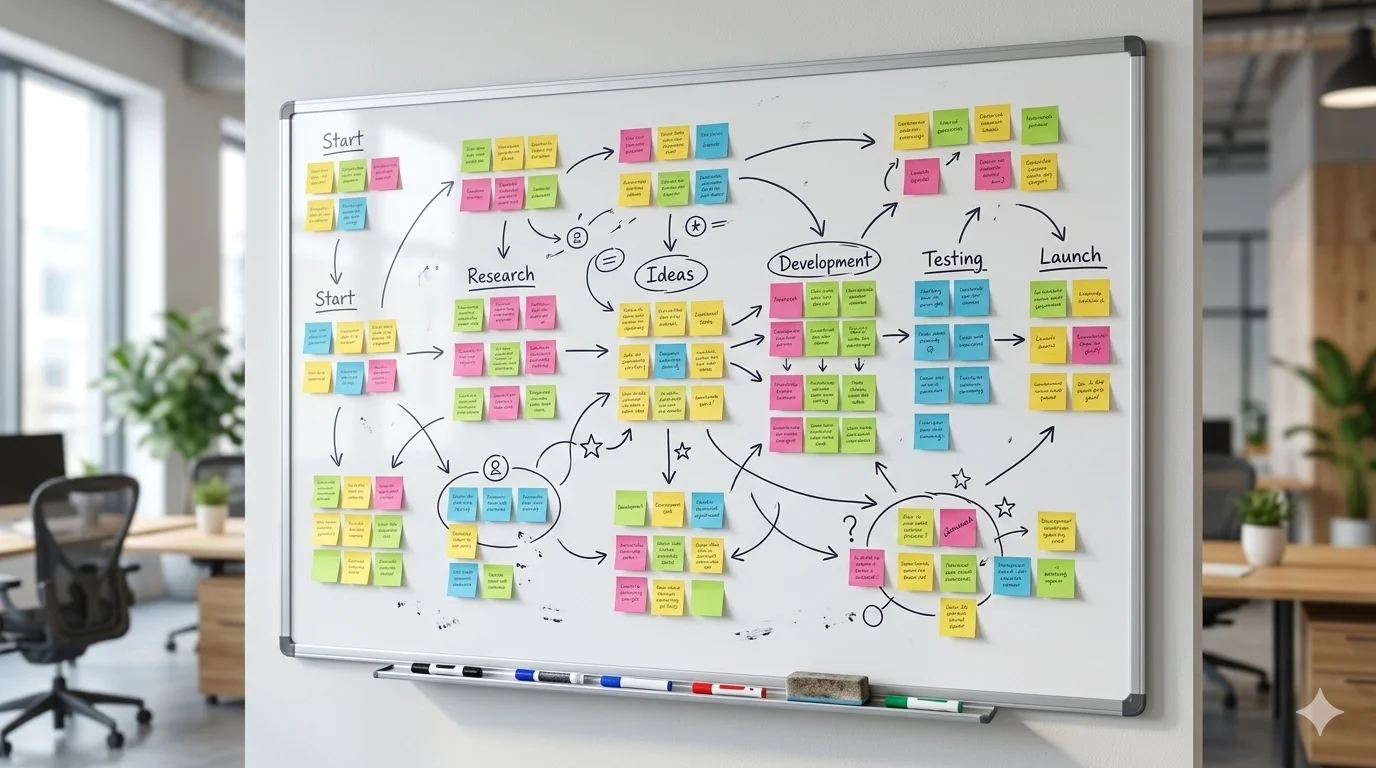
Digital Marketing for SMEs: the Complete Guide to Getting Started in 2026
SEO, social media, email marketing, advertising: the complete digital marketing roadmap for SMEs with realistic budgets and priorities.
How to Build a Successful E-commerce for Your Small Business
Complete guide for small businesses: the 5 pillars of an e-commerce that sells, costs, grants up to 60%, and mistakes to avoid.