
How Much Does a Business App Cost in 2026: Complete Guide for SMEs
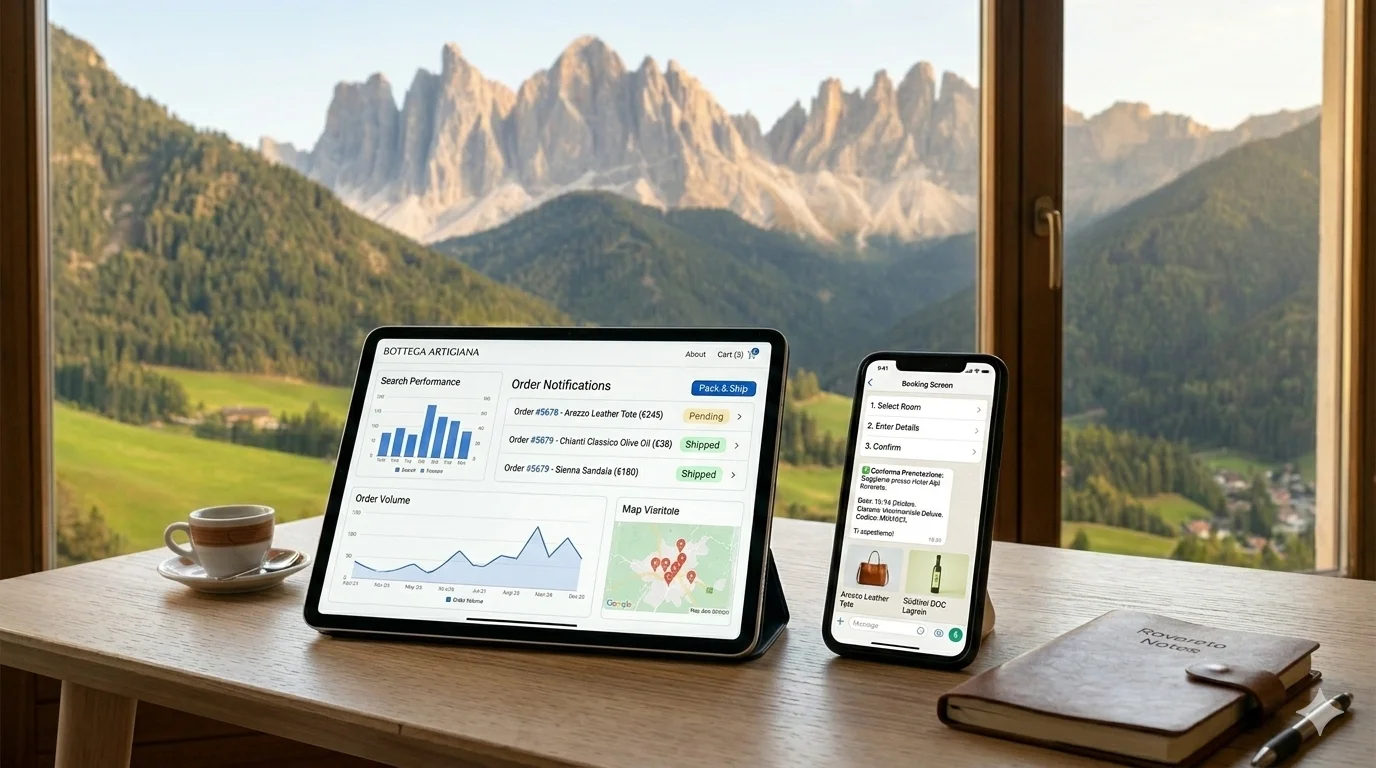
90% of mobile time is spent in apps. But does your business have one?
Italians spend 3 hours a day on their smartphones. Of that time, 90% is spent inside apps — not on websites. Apps generate 157% higher conversions than mobile websites, and the average order value is up to 50% higher.
Yet only 20% of Italian businesses sell online, and the percentage that has a business app is even lower. It's a paradox: the European app market grew 24% last year, global consumer spending on apps exceeded €155 billion in 2025, but Italian SMEs are standing still.
The reason? The wrong question. It's not "do I need an app?" — it's "how much does it cost and how much will it earn me?". In this guide, we answer with real numbers, without unnecessary jargon.
What a business app can do for you
A business app isn't a tech gadget. It's a sales, loyalty, and automation tool that works for you 24 hours a day. Here are the concrete applications by sector.
Internal management
A management app allows your team to handle orders, inventory, clients, and deadlines from any device. 63% of Italian SMEs still use spreadsheets to manage business processes — with errors, lost data, and wasted hours. A custom management app eliminates these problems. To learn more, read our guide on how to build an e-commerce that integrates management and online sales.
Bookings and appointments
38% of restaurant reservations in Italy already come from online platforms — and the percentage is growing 9% every year. For hotels, professional practices, and beauty centres, an app with integrated booking reduces no-shows by up to 58% through automatic confirmations and reminders.
Mobile e-commerce
82% of Italians have purchased at least once from their smartphone. But the experience on a mobile website is often frustrating — small screens, slow loading, complicated checkout. An e-commerce app solves everything: app users buy 33% more frequently and spend more per order.
Customer loyalty
App-based loyalty programmes generate an average ROI of 5.2x. App users access loyalty programmes 22 times per month compared to 3 times for website users. 74% of companies consider the app the primary channel for loyalty in 2026. Push notifications have open rates of 3-5% — up to 5 times higher than email.
The factors that determine app cost
An app's cost depends on 5 main factors. Understanding them helps you plan your budget without surprises.
Functional complexity
The difference between an €8,000 app and a €50,000 app lies in the features. An app with 3-5 screens (login, catalogue, contacts) costs much less than one with payments, real-time chat, geolocation, and a user dashboard. The advice: start with an MVP (minimum viable product), launch quickly, and add features based on real customer feedback.
Platform: native vs cross-platform
Developing a native app for each operating system doubles time and costs — you essentially build two separate apps. Cross-platform development creates a single app that works on both systems, reducing costs by 30-40% and timelines by 30-40%. For most business apps, cross-platform delivers performance indistinguishable from native.
Custom design and UX
Design accounts for 15-30% of the total budget. Custom design tailored to your users makes the difference between an app that gets used and one that gets uninstalled after 3 days. Learn more about the importance of design through our UI/UX design services.
Integrations
An app that exists in isolation is of little use. Integrations with your management system, payment gateway, CRM, push notifications, and shipping services add complexity — but they're what transforms the app from "nice to look at" into a revenue-generating tool.
Maintenance and updates
An app isn't a one-off product. Every year you need security updates, compatibility with new OS versions, bug fixes, and improvements. Annual maintenance costs are typically 15-20% of the initial development cost. Plan for this from the start.
How much does a business app cost in 2026
Here are the real price ranges for developing a business app in Italy in 2026.
- MVP / functional prototype — €8,000 to €10,000. Essential features to validate the idea, 3-5 screens, clean design, basic backend. Ideal for testing the market before investing more. Timeline: 4-8 weeks
- Medium complexity app — €15,000 to €25,000. User authentication, external system integrations, payments, full custom design, user dashboard. The right choice for most business apps. Timeline: 2-4 months
- Complex / enterprise app — from €25,000 upward. Advanced features, complex backend, artificial intelligence, multiple integrations, enterprise scalability. For ambitious projects with specific requirements. Timeline: 4-8 months
Add store publication costs (€25/year + €99/year) and annual maintenance (15-20% of development cost) to these figures.
For South Tyrolean businesses, these investments can be significantly reduced through non-repayable grants. Read our complete guide on non-repayable grants for small businesses in South Tyrol.
Want to know how much your app would cost? Ivemind analyses your needs and provides a detailed quote with no obligation. From initial consultation to store publication. Let's talk →
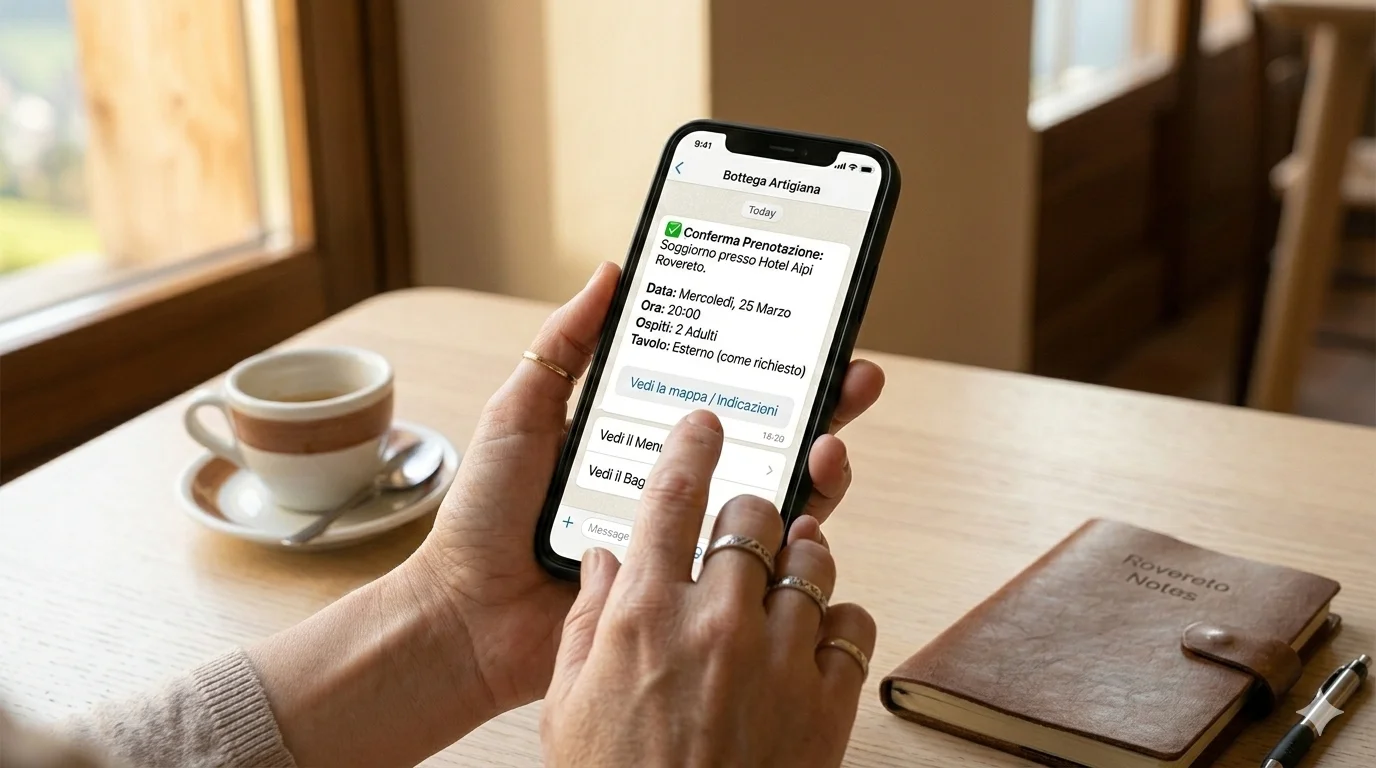
App vs mobile website: when do you really need an app
Not every business needs an app. A well-built professional website is sufficient for many businesses. Here's when an app truly makes the difference.
You need an app when:
- Your customers need to interact frequently with your service (bookings, orders, check-ins)
- You want to send push notifications for promotions, reminders, or updates
- You need offline functionality (catalogue browsable without connection)
- You want a loyalty programme with digital card and points collection
- Your team needs a mobile management tool to work on the go
A website is enough when:
- Interaction is primarily informational (about us, services, contacts)
- Purchases are occasional, not repetitive
- The budget is limited and you want to maximise Google visibility
The best solution? Often it's both: a website for visibility and customer acquisition, an app for loyalty and repeat sales.
Industries where apps generate the most value
Some sectors see a particularly high return on investment from business apps.
Restaurants
38% of reservations in Italian restaurants come from digital platforms. Restaurants with digital booking systems reduce no-shows from 12.8% to 5.4%. An app with ordering, table booking, loyalty programme, and push notifications transforms occasional customers into regulars — those with a loyalty programme return within 60 days 48% of the time, versus 34% without. Integrating an AI chatbot that handles orders and bookings via WhatsApp drives even higher returns.
Hotels and tourism
Direct bookings generate €516 per booking versus €312 from intermediary platforms — 65% more. With an app that includes a booking engine, digital concierge, and upselling (room upgrades, spa, experiences), a hotel can reduce commissions of 15-25% and increase revenue per guest. In South Tyrol, with 37.1 million overnight stays per year, the potential is enormous.
Retail and commerce
App users view 4.2 times more products per session than mobile website visitors. E-commerce apps have conversion rates of 6-9% versus 2.5-3% for mobile web. 60% of first-time app purchasers make additional purchases. For those who already have an e-commerce, adding an app is the most effective way to increase average customer value.
Professional services
Lawyers, accountants, dentists, consultants. An app for appointment management, document sharing, and client communication reduces phone calls by 40% and missed appointments by up to 30%. Integrated with an AI chatbot, it handles requests and bookings 24 hours a day.
Funding for your app development
A business app is a digitalisation investment — and can benefit from significant non-repayable grants.
- Province of South Tyrol — grant up to 60% non-repayable on digitalisation projects between €2,000 and €15,000. An MVP app fits perfectly
- MIMIT Voucher — covers 50% up to €20,000 for software, applications, and digital solutions
- Transition 5.0 — tax credit up to 45% for digital asset investments
With the provincial grant, a €10,000 app can cost you just €4,000. For full details on available funding, read our complete guide on non-repayable grants for small businesses in South Tyrol.
Mistakes to avoid
Developing an app is a significant investment. Here are the mistakes we see most often — and how to avoid them.
Starting with too many features
39% of apps launched in 2024 were pulled back or redesigned after launch. The main reason: too much complexity, too soon. Start with an MVP, launch, gather feedback, and add features based on real data — not assumptions.
Ignoring design
75% of users judge a company's credibility by its design. An ugly or difficult-to-use app gets uninstalled within days. Investing in design isn't a luxury — it's the factor that determines whether the app will be used or abandoned.
Not planning for maintenance
An unmaintained app becomes incompatible with new operating systems, vulnerable to security threats, and full of bugs. Plan for 15-20% annually of development cost for maintenance — it's an investment that protects your initial investment.
Developing without strategy
An app must solve a specific problem for your customers or your team. "Everyone has an app" isn't a strategy. Before developing, ask yourself: what problem does it solve? Who will use it? How do I measure success? For a complete view of your digital strategy, read our guide on how to advertise your business.
Ivemind: your app development partner
Ivemind is a social cooperative and innovative startup based in Bolzano, South Tyrol. We develop custom business apps for small and medium businesses — from initial consultation to store publication, with maintenance and updates included.
We don't install pre-packaged solutions. We build apps designed around the specific needs of your business, your customers, and your market.
With Ivemind you get:
- Strategic consulting — we analyse your business to understand if an app is the right choice and what type of app you need
- Custom design — intuitive interfaces designed for your users, not generic templates
- Cross-platform development — a single app that works on all devices, reducing costs and timelines
- Full integrations — management system, payments, push notifications, CRM, everything connected
- Store publication — we manage the entire publication and approval process
- Ongoing maintenance — updates, security, and improvements included
- Grant assistance — we guide you through accessing provincial non-repayable funds
We've helped 47+ companies and organisations build their digital presence, with 100% client satisfaction. 60% of our profits are reinvested in social inclusion projects.
Contact us for a free consultation or discover our app development services.