
Bilingual E-commerce in South Tyrol: How to Sell Online in Italian and German to the DACH Market
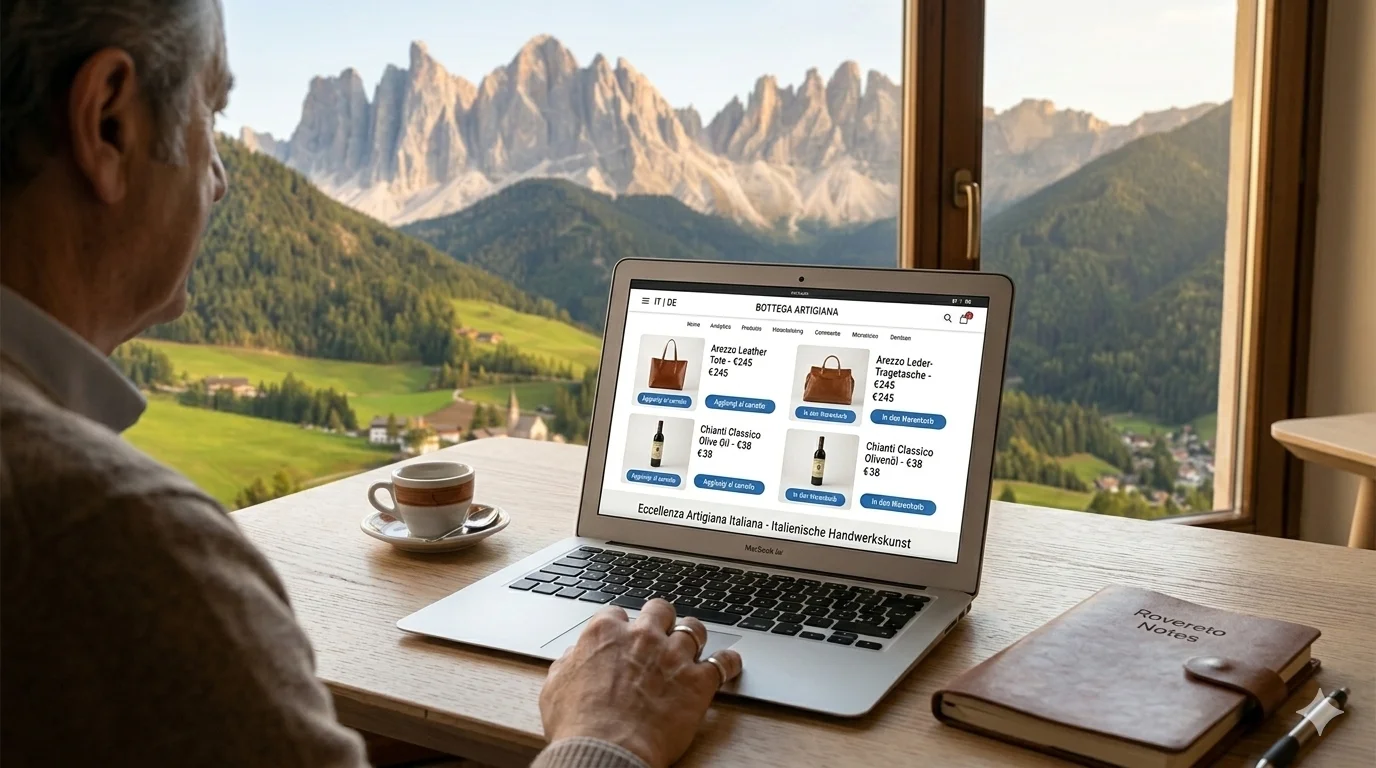
69% of South Tyrol speaks German. But almost no local e-commerce is bilingual
South Tyrol is a unique territory in Europe: 69% of the population speaks German as their mother tongue, 27% Italian, and a small community speaks Ladin. It's the wealthiest province in Italy, with a GDP per capita of €62,100 — the highest in the country. And it borders directly with Austria and Switzerland, two of the markets with the highest purchasing power in the world.
Yet the vast majority of local businesses' online stores are Italian only. In a province where 69% of people prefer to buy in their own language. An enormous opportunity that almost nobody is seizing.
Why does this matter? Because 76% of consumers prefer to buy on websites in their own language, and 40% will never buy from sites in a language other than their own. In South Tyrol, an Italian-only e-commerce cuts itself off from two-thirds of the local market — and from 100 million potential customers in the DACH market (Germany, Austria, Switzerland).
The DACH market: 100 million customers within reach
South Tyrol isn't just a local market of 540,000 inhabitants. It's the gateway to the largest German-speaking market in the world.
- Germany — e-commerce market worth €116.6 billion in 2025, growing at 4.1% annually. 78% of the population shops online
- Austria — 97% internet penetration, average online spending of €1,313 per capita per year
- Switzerland — 100% internet penetration, average online spending approaching €2,000 per capita — the highest in Europe
Together, the DACH market will reach €122 billion in e-commerce revenue by 2029. And South Tyrol is already inside this market: 62% of tourists visiting the province are German. 37.1 million overnight stays in 2024, of which nearly 23 million from German-speaking guests.
These tourists go home and search online for the products they discovered on holiday: speck, wine, apples, local crafts. If they find your e-commerce in German, they buy. If they only find Italian, they go elsewhere.
Why bilingualism sells more
This isn't opinion — it's data. The language you present your products in has a direct impact on sales:
- Conversions increase by up to 70% after localising e-commerce content
- 94% of consumers are more loyal to brands offering content in their language
- 58% perceive the lack of a multilingual experience as a form of bias
- Every euro invested in localisation generates €25 in return
- Customer satisfaction increases by 53% when the site is in their language
In South Tyrol, this effect is amplified. A customer from Merano who finds an e-commerce in German feels at home. An Austrian tourist who visited your agriturismo and finds your online shop in German trusts you immediately. Language isn't just communication — it's trust, identity, belonging.
And we're not just talking about translating the site. Localisation means adapting prices to local currency (for Switzerland), payment methods (invoice and bank transfer for Germans, digital wallets for Italians), cross-border shipping, and even the tone of communication.
What to sell online from South Tyrol
South Tyrol has a wealth of unique products that the DACH market already knows and appreciates. Here are the sectors with the greatest potential for bilingual e-commerce.
Wine and wine products
With 5,300 hectares of vineyards and 160 wineries, South Tyrol produces internationally recognised quality wines. German and Austrian tourists discover local wines during their holidays — a bilingual e-commerce allows you to keep selling all year round, directly from the winery to the customer's door.
Speck and typical products
Speck Alto Adige IGP is a brand known throughout the German-speaking world. An e-commerce with refrigerated shipping, detailed descriptions in German and Italian, and a subscription system for regular deliveries can transform a seasonal product into a steady revenue stream.
Apples and agricultural products
South Tyrol is the EU's largest apple-producing region: 18,400 hectares, 950,000 tonnes per year. 50% is sold in Italy, but Germany is the top export market. An e-commerce for juices, cider, jams, and derived products has a ready-made market.
Craftsmanship and woodwork
The woodcarving tradition in Val Gardena spans over 400 years. Unique handcrafted products that tourists buy on holiday and can continue buying online — if the site is in their language and ships to their country.
Tourism and experiences
Holiday packages, spa and restaurant vouchers, bookings for hikes and activities. With 8.7 million arrivals in 2024, online experience sales are a huge market. A bilingual booking system with a multilingual AI chatbot can handle requests in Italian, German, and English 24 hours a day.
Want to sell your South Tyrolean products to the 100 million customers in the DACH market? Ivemind is based in Bolzano, speaks Italian and German, and builds custom bilingual e-commerce for local businesses. Let's talk →
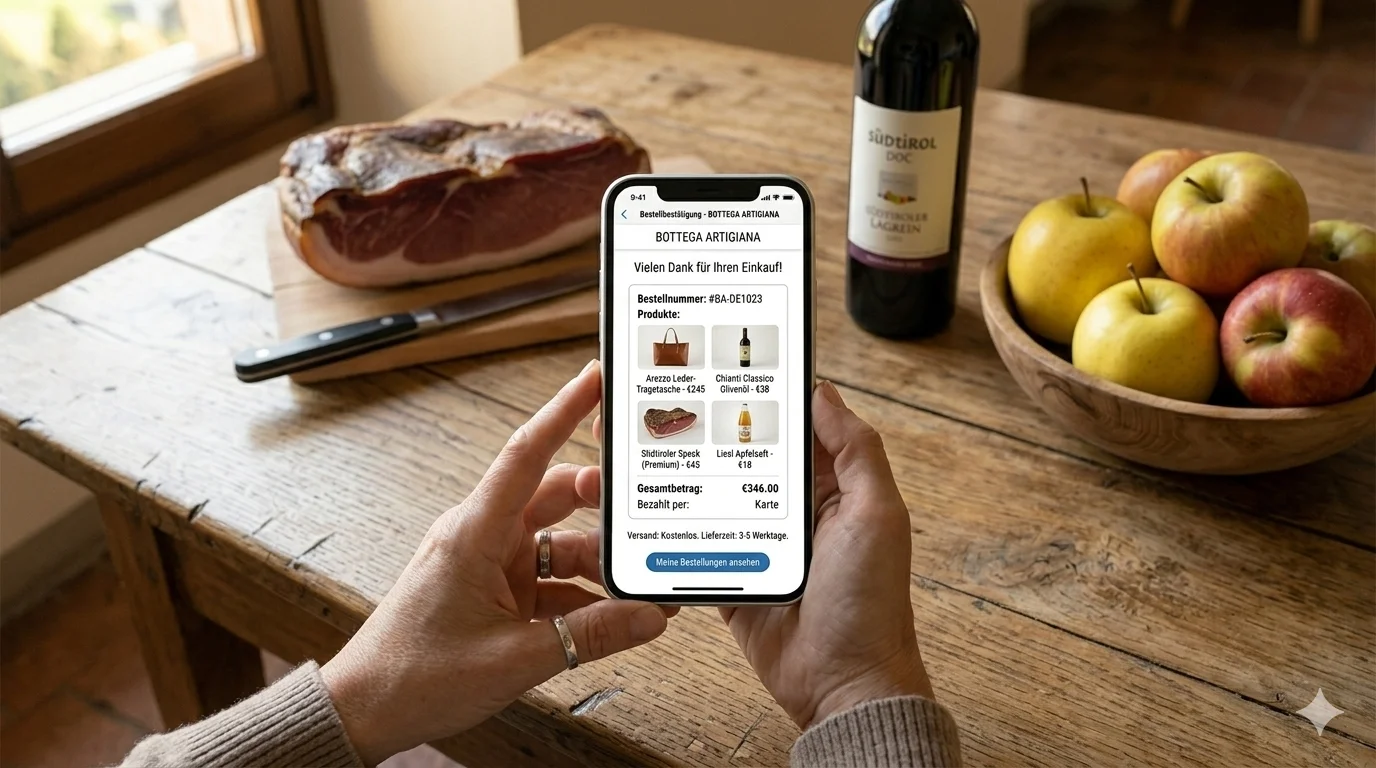
The 5 requirements of a bilingual e-commerce that works
A bilingual e-commerce isn't a website translated with Google Translate. It's an online store designed to sell in two (or more) different markets. Here's what it takes to do it right.
1. Professional translation, not automatic
75% of consumers want the entire shopping experience in their own language — not just product titles. Descriptions, terms of sale, confirmation emails, customer service. An automatic translation full of grammatical errors communicates one thing only: we don't care about the German-speaking customer. Translation must be professional, natural, and culturally appropriate.
2. Intuitive language switching
The customer must be able to switch language with one click, without losing the page they're on. If they're viewing a product in Italian and want to switch to German, they should find themselves on the same product in German — not the homepage. It seems obvious, but most bilingual sites get this wrong.
3. Localised payments
Preferred payment methods change dramatically between Italy and DACH:
- Italy — digital wallets (PayPal, Apple Pay, Satispay) dominate with 40% of purchases, card payments declining
- Germany/Austria — 41% prefer invoice payment (Kauf auf Rechnung), 32% use PayPal, bank transfers are still very common
- Switzerland — average online spending of €2,000/year, preference for PostFinance and invoice
An e-commerce that only offers credit cards loses customers in both markets. Payment methods must adapt to the selected language.
4. Cross-border shipping
53% of abandoned carts are caused by shipping costs that are too high. For a bilingual e-commerce selling in Italy, Austria, and Germany, logistics must be:
- Transparent — clear shipping costs before checkout, different for Italy and abroad
- Fast — German customers expect delivery within a week, with precise tracking
- With easy returns — a simple and free (or low-cost) return process is essential for DACH customer trust
From South Tyrol, shipping to Austria or Bavaria is often faster than shipping to Sicily. A unique logistical advantage that very few local businesses are exploiting.
5. Bilingual SEO
Your e-commerce must be findable on Google in both Italian and German. It's not enough to translate content — you need separate keyword research for each language, dedicated URLs, localised meta tags, and structured data in both languages.
"Speck online kaufen" and "comprare speck online" are two different searches, with different volumes and competition. An e-commerce optimised for local SEO in both languages captures traffic from both markets. For more on the importance of Google visibility, read our guide on how to appear on Google Maps.
Legal and tax considerations
Selling online in multiple EU countries requires attention to some regulatory aspects.
VAT for cross-border sales
Since 2021, the EU has introduced a single threshold of €10,000 per year for distance selling. Below this threshold, you apply Italian VAT. Above it, you must apply the VAT rate of the customer's country. The good news: you can register for the OSS (One Stop Shop) and manage VAT for all EU countries with a single declaration.
Mandatory bilingualism
South Tyrol's Autonomy Statute requires bilingualism in public administration. There's no legal obligation for private businesses, but a bilingual e-commerce is a strategic choice in a territory where 69% speaks German. Not doing it means giving up the majority of the local market.
Right of withdrawal
EU regulations provide a 14-day right of withdrawal for online purchases, valid in Italy, Austria, Germany, and Switzerland. Return conditions must be clear and available in both languages.
Funding for your bilingual e-commerce
A bilingual e-commerce is a digitalisation and internationalisation project — and can benefit from significant non-repayable grants.
- Province of South Tyrol — grant up to 60% non-repayable on digitalisation projects between €2,000 and €15,000. A bilingual e-commerce fits perfectly
- MIMIT Voucher — covers 50% up to €20,000 for e-commerce platforms and order management software
- Transition 5.0 — tax credit up to 45% for digital asset investments
- Internationalisation grants — the Bolzano Chamber of Commerce and ICE periodically offer specific grants for digital export
For full details on available funding, read our complete guide on non-repayable grants for small businesses in South Tyrol. With the provincial grant, a €10,000 bilingual e-commerce can cost you just €4,000.
Ivemind: your bilingual e-commerce partner
Ivemind is a social cooperative and innovative startup based in Bolzano. We speak Italian and German. We know the territory, its businesses, and its markets. We develop custom bilingual e-commerce for South Tyrolean businesses that want to sell online in the local market and the DACH market.
We're not an agency from Milan or Rome that "translates" an Italian site. We build natively bilingual e-commerce, designed from the start to sell in Italian and German, with the cultural, payment, and logistics differences that each market requires.
With Ivemind you get:
- Natively bilingual e-commerce — Italian and German (and English if needed), with perfect language switching on every page
- Professional translations — no Google Translate. Text written by people who actually speak both languages
- Localised payments — digital wallets for Italy, invoice and bank transfer for DACH, all configured
- Cross-border shipping — integration with couriers for Italy, Austria, and Germany, with tracking and returns
- Bilingual SEO — separate keyword research and optimisation for each language, to be found on Google.it and Google.de
- Multilingual chatbot — AI assistant that responds to customers in Italian, German, and English 24/7
- Grant assistance — we guide you through accessing provincial non-repayable funds
We've helped 47+ companies and organisations build their digital presence, with 100% client satisfaction. 60% of our profits are reinvested in social inclusion projects.
Contact us for a free consultation or discover our e-commerce development services. For a general e-commerce guide, read our article on how to build a successful e-commerce.